A eucalyptus limb across your driveway. A pine leaning hard toward the roofline after a Santa Ana wind event. A trunk split at the crotch with the whole canopy hanging over a neighbor’s fence. When a tree fails in Irvine, the problem doesn’t wait — and neither should the removal. JLG Tree Service handles emergency tree removal throughout Irvine and the surrounding Orange County communities, from the first hazard assessment to the last chip cleared off your property. Call us and describe what you’re looking at.
Emergency removal is different from a scheduled takedown. The tree is already compromised, the load is already unbalanced, and the failure point may not be where it looks. The first thing our crew does on arrival is read the tree: where the fracture is, which way the weight is pulling, whether roots have lifted on one side, and what’s underneath it — roof, fence, pool equipment, utility drop, parked cars.
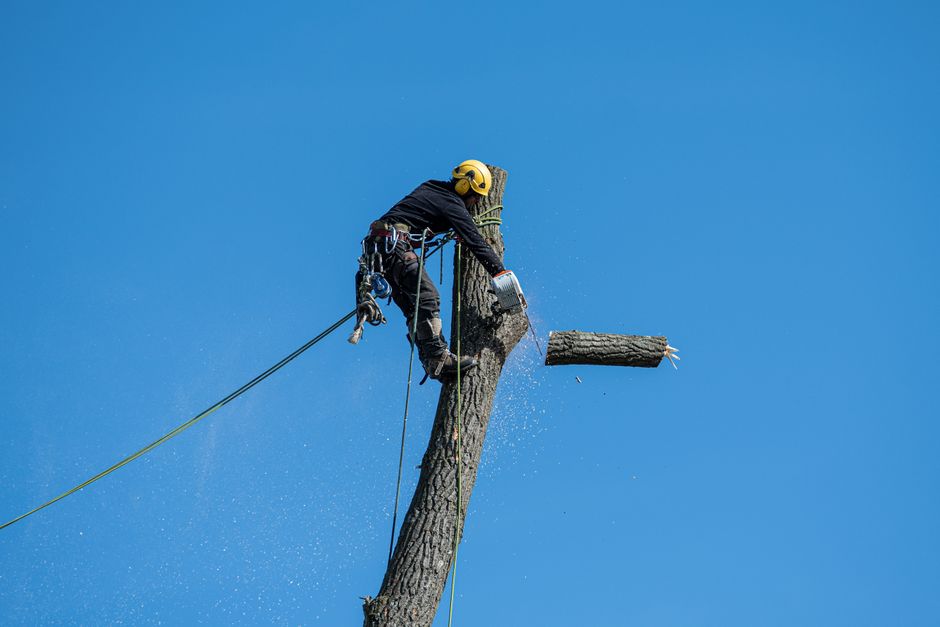
From there the work is staged. Hanging limbs and widow-makers come down first, usually rigged with lowering lines rather than dropped free, so nothing gains momentum on the way down. Sections of trunk are cut and lowered in controlled pieces. On tight Irvine lots and inside HOA-managed communities where there’s no room to fell a tree whole, we climb it or work from a bucket and take it down piece by piece over rigging points.
Once the hazard is neutralized, we cut the wood into manageable rounds, chip the brush, rake the work zone, and haul everything out. If the stump needs to go too, that’s a separate grinding operation we can schedule.
There’s no flat price on emergency work, because no two failures are alike. Estimates range based on the size and species of the tree, how much of it has already come down, and — most of all — access. A 40-foot pine in an open Irvine backyard with gate access is a straightforward job. That same pine leaning across a roof, with the only route out being a five-foot side yard, is a very different operation requiring rigging, climbing, and hand-hauling every piece to the street.
Other cost drivers: proximity to power lines, whether a crane or bucket truck is needed, wood volume for haul-off, and whether the tree is stable enough to climb. Standard removal pricing includes the takedown, chipping, and haul-away of debris. Stump grinding, root removal, and replanting are quoted separately. We’ll walk the property, tell you exactly what the job requires and why, and give you a free written quote before any work starts.
Treat it as an emergency if the tree is leaning noticeably more than it was, if soil has heaved or cracked around the base, if there’s a visible split in the trunk or a major limb union, or if any part of it is resting on a structure or power line. A limb down in an empty part of the yard can usually be scheduled normally.
Keep people and pets away from the tree and anything under it, move vehicles out of the potential fall zone, and don’t try to cut or pull on anything yourself — a loaded limb under tension releases with a lot more force than people expect. If a line is involved, call the utility first.
We can. On emergency calls we prioritize getting the hazard down and the property clear, then schedule stump grinding as a separate visit. It’s quoted separately from the removal.
Yes. Most Irvine properties don’t allow equipment access to the rear yard, so we climb the tree and remove it in sections, rigging pieces down and carrying them out through the side yard to the chipper at the curb.
Brush goes through the chipper and gets hauled off. Trunk wood is cut into rounds and removed as well — though if you want the rounds left for firewood, tell us and we’ll stack them.
Anything contacting or immediately adjacent to a service drop needs to be reported to the utility first, since they control de-energizing the line. Once that’s addressed, we handle the removal.
If you’re looking at a tree in Irvine that’s split, leaning, uprooted, or already down on something it shouldn’t be, don’t wait for it to move again. Call JLG Tree Service at (714) 770-1850 and describe what you’re seeing — we’ll assess the hazard and give you a free quote on the removal.